As we age, small changes can increase the risk of a fall
Falls don’t usually happen because of one big issue.
They happen because of small changes that build up over time.
- Balance isn’t quite as steady.
- Muscles aren’t as strong.
- Reactions are a little slower.
And things that once felt simple—walking across a room, stepping over a threshold, getting up from a chair—can become less predictable.
For many older Australians, these changes happen gradually. However, the risk they create can increase quickly.
Why older adults are more at risk
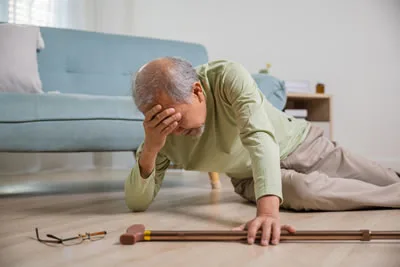 There are several common factors that increase fall risk with age.
- Reduced muscle strength — Muscles naturally weaken over time, especially without regular use. This affects stability and the ability to catch yourself if you trip.
- Balance and coordination changes — Inner ear function and coordination can decline, making it harder to stay steady on uneven surfaces.
- Medications and side effects — Some medications can cause dizziness, fatigue or drops in blood pressure—especially when standing up quickly.
- Changes in vision — Depth perception and clarity can shift, making it harder to judge steps, edges and obstacles.
- Fatigue or low energy — Not eating regularly or staying hydrated can lead to weakness, increasing the likelihood of a fall.
- Reduced flexibility — Less range of motion means slower reactions when something unexpected happens.
Individually, these may seem minor. Together, they can significantly increase risk.
Everyday habits that can increase the chance of a fall
Often, it’s the small, everyday choices that make the biggest difference.
- Wearing loose or long clothing that can catch under your feet
- Walking in socks or worn shoes without proper grip
- Leaving clutter, cords or rugs in walkways
- Rushing, especially when getting up too quickly
- Not using support when it’s needed (rails, walking aids)
- Poor lighting in hallways, bathrooms or outdoor areas
These are easy to overlook—but they are common causes of falls in the home.
Simple ways to reduce the risk
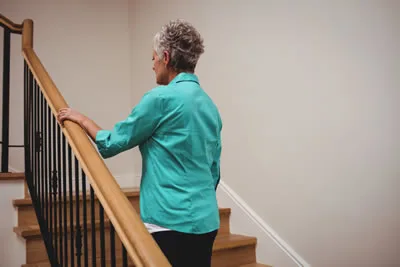
Using handrails isn’t a sign of weakness — it’s one of the simplest ways to prevent a fall.
Prevention doesn’t need to be complicated. Small changes can make a big difference.
- Keep walkways clear — Remove clutter, secure loose rugs and ensure cords are out of the way.
- Wear supportive footwear — Choose shoes with good grip. Avoid walking in socks on smooth surfaces.
- Review clothing choices — Avoid long or loose garments that could catch under your feet.
- Improve lighting — Make sure all areas of the home are well lit, especially at night.
- Move with awareness — Take your time when standing up or changing direction.
- Stay nourished and hydrated — Regular meals and water intake help maintain strength and alertness.
Build strength and stability over time
One of the most effective ways to reduce falls risk is to build strength.
Simple activities can help:
- Light resistance exercises
- Balance training (standing on one foot, heel-to-toe walking)
- Regular walking to maintain mobility
- Gentle stretching to improve flexibility
Even small amounts of movement done consistently can improve confidence and stability.
Review medications and health regularly
If dizziness or fatigue is present, it’s worth reviewing medications with a healthcare provider.
Sometimes, simple adjustments can reduce side effects that increase fall risk.
Regular check-ups for vision, hearing and overall health also play an important role.
Prevention is important—but it’s not the whole picture
April No Falls focuses on prevention—and these steps matter.
However, falls can still happen.
And when they do, the impact often extends beyond the physical injury.
- Daily routines can change.
- Support may be needed.
- Family or carers may need to step in quickly.
This is where preparation becomes just as important as prevention.
Where this fits with end-of-life planning
End-of-life planning is about preparing for the future.
However, many real-life situations—like a fall—happen well before that point.
Having key information organised means that if something does happen, others are not left trying to work things out during a stressful time.
It supports independence for longer—and reduces pressure on loved ones.
Stay steady, stay aware, stay prepared
Falls risk increases with age—but there is a lot that can be done to reduce it.
Small changes in habits, environment and awareness can make a real difference.
And alongside prevention, having a plan in place ensures that if something does happen, you’re not facing it alone.
Be Ready When Life Takes a Turn — browse our Health Event Handbook Kit
As we age, small changes can increase the risk of a fall
Falls don’t usually happen because of one big issue.
They happen because of small changes that build up over time.
- Balance isn’t quite as steady.
- Muscles aren’t as strong.
- Reactions are a little slower.
And things that once felt simple—walking across a room, stepping over a threshold, getting up from a chair—can become less predictable.
For many older Australians, these changes happen gradually. However, the risk they create can increase quickly.
Why older adults are more at risk
There are several common factors that increase fall risk with age.
- Reduced muscle strength — Muscles naturally weaken over time, especially without regular use. This affects stability and the ability to catch yourself if you trip.
- Balance and coordination changes — Inner ear function and coordination can decline, making it harder to stay steady on uneven surfaces.
- Medications and side effects — Some medications can cause dizziness, fatigue or drops in blood pressure—especially when standing up quickly.
- Changes in vision — Depth perception and clarity can shift, making it harder to judge steps, edges and obstacles.
- Fatigue or low energy — Not eating regularly or staying hydrated can lead to weakness, increasing the likelihood of a fall.
- Reduced flexibility — Less range of motion means slower reactions when something unexpected happens.
Individually, these may seem minor. Together, they can significantly increase risk.
Everyday habits that can increase the chance of a fall
Often, it’s the small, everyday choices that make the biggest difference.
- Wearing loose or long clothing that can catch under your feet
- Walking in socks or worn shoes without proper grip
- Leaving clutter, cords or rugs in walkways
- Rushing, especially when getting up too quickly
- Not using support when it’s needed (rails, walking aids)
- Poor lighting in hallways, bathrooms or outdoor areas
These are easy to overlook—but they are common causes of falls in the home.
Simple ways to reduce the risk
Prevention doesn’t need to be complicated. Small changes can make a big difference.
- Keep walkways clear — Remove clutter, secure loose rugs and ensure cords are out of the way.
- Wear supportive footwear — Choose shoes with good grip. Avoid walking in socks on smooth surfaces.
- Review clothing choices — Avoid long or loose garments that could catch under your feet.
- Improve lighting — Make sure all areas of the home are well lit, especially at night.
- Move with awareness — Take your time when standing up or changing direction.
- Stay nourished and hydrated — Regular meals and water intake help maintain strength and alertness.
Using handrails isn’t a sign of weakness — it’s one of the simplest ways to prevent a fall.
Build strength and stability over time
One of the most effective ways to reduce falls risk is to build strength.
Simple activities can help:
- Light resistance exercises
- Balance training (standing on one foot, heel-to-toe walking)
- Regular walking to maintain mobility
- Gentle stretching to improve flexibility
Even small amounts of movement done consistently can improve confidence and stability.
Review medications and health regularly
If dizziness or fatigue is present, it’s worth reviewing medications with a healthcare provider.
Sometimes, simple adjustments can reduce side effects that increase fall risk.
Regular check-ups for vision, hearing and overall health also play an important role.
Prevention is important—but it’s not the whole picture
April No Falls focuses on prevention—and these steps matter.
However, falls can still happen.
And when they do, the impact often extends beyond the physical injury.
- Daily routines can change.
- Support may be needed.
- Family or carers may need to step in quickly.
This is where preparation becomes just as important as prevention.
Where this fits with end-of-life planning
End-of-life planning is about preparing for the future.
However, many real-life situations—like a fall—happen well before that point.
Having key information organised means that if something does happen, others are not left trying to work things out during a stressful time.
It supports independence for longer—and reduces pressure on loved ones.
Stay steady, stay aware, stay prepared
Falls risk increases with age—but there is a lot that can be done to reduce it.
Small changes in habits, environment and awareness can make a real difference.
And alongside prevention, having a plan in place ensures that if something does happen, you’re not facing it alone.
Be Ready When Life Takes a Turn — browse our Health Event Handbook Kit