
Understanding End-of-Life Planning
Most people know they should get their affairs in order at some point. Yet when they search for an end-of-life planning checklist, they are often met with confusing documents, legal jargon and pages of forms that feel overwhelming rather than helpful.
The truth is that good planning is not about filling out complicated paperwork. It is about making sure the right information, documents and decisions are organised so your loved ones are not left trying to piece everything together during an already difficult time.
A clear checklist can help you identify the most important things to organise — from legal documents and financial information to personal wishes and practical details.
Below are the key areas everyone should consider when putting together an end-of-life plan.
1. Legal Documents
 One of the most important steps in end-of-life planning is ensuring that the correct legal documents are prepared and up to date.
These documents allow your wishes to be respected and ensure someone you trust has the authority to act on your behalf if needed.
Important legal documents may include:
- A valid Will
- An Advance Care Directive or similar medical decision document
- An Enduring Power of Attorney
- Superannuation beneficiary nominations
- Organ donation registration (if applicable)
Without these documents in place, decisions about your finances, medical care, and estate may be made according to default legal rules rather than your personal wishes.
2. Important Personal Documents
Your family or executor will need access to key identification and official records after your death. Knowing where these documents are stored can save significant time and stress.
Important documents to organise include:
- Birth certificate
- Marriage or divorce certificates
- Passport
- Insurance policies
- Property purchase records
- Superannuation statements
- Copies of legal documents
Keeping these documents together in a secure but known location makes it much easier for loved ones to manage practical matters when the time comes.
3. Financial Information
Many families face unnecessary stress because financial information is scattered across different accounts, files and institutions.
Creating a clear record of your financial information can help ensure that assets are located and managed properly.
Information to record may include:
- Bank accounts
- Superannuation funds
- Investment accounts or shares
- Life insurance policies
- Mortgages or other loans
- Credit cards and liabilities
- Utility providers and subscription services
This information does not need to include sensitive passwords or access codes, but simply documenting what exists and where it is held can be extremely helpful.
4. Personal and Family Considerations
End-of-life planning is not only about documents and finances. It also involves thinking about the people and responsibilities in your life.
Consider recording your wishes or instructions regarding:
- Care arrangements for children or dependants
- Care of pets
- Important family contacts
- Personal messages or letters
- Any special family circumstances your loved ones should be aware of
These personal details often matter just as much as legal paperwork.
5. Funeral and End-of-Life Wishes
Many people have preferences about how they would like their funeral or memorial to be handled, but those wishes are rarely written down.
Recording these preferences can reduce uncertainty and emotional stress for your family.
You may wish to note:
- Whether you prefer burial or cremation
- Any cultural or spiritual traditions to be respected
- Music or readings for the service
- Charities for donations in lieu of flowers
- People who should be notified
These are not legally binding instructions, but they can provide valuable guidance for loved ones.
6. Keeping Everything Organised
 One of the biggest challenges families face after someone dies is simply finding the right information.
Documents may be stored in multiple locations, important details may be missing, and loved ones are often left trying to piece together accounts, records and personal wishes during an already difficult time.
This is where organisation becomes just as important as the documents themselves.
The Handbook of Your Life was created to help bring all of this information together in one place — from important documents and financial details to personal wishes and practical information your family may need.
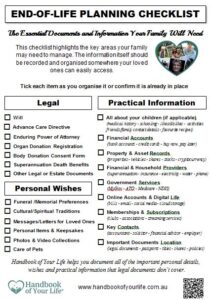
To help you get started, we have also created a simple End-of-Life Planning Checklist that outlines the key areas to organise.
Download the checklist to guide you through the essential steps and make it easier to start putting your affairs in order.
Understanding End-of-Life Planning
Most people know they should get their affairs in order at some point. Yet when they search for an end-of-life planning checklist, they are often met with confusing documents, legal jargon and pages of forms that feel overwhelming rather than helpful.
The truth is that good planning is not about filling out complicated paperwork. It is about making sure the right information, documents and decisions are organised so your loved ones are not left trying to piece everything together during an already difficult time.
A clear checklist can help you identify the most important things to organise — from legal documents and financial information to personal wishes and practical details.
Below are the key areas everyone should consider when putting together an end-of-life plan.
1. Legal Documents
One of the most important steps in end-of-life planning is ensuring that the correct legal documents are prepared and up to date.
These documents allow your wishes to be respected and ensure someone you trust has the authority to act on your behalf if needed.
Important legal documents may include:
- A valid Will
- An Advance Care Directive or similar medical decision document
- An Enduring Power of Attorney
- Superannuation beneficiary nominations
- Organ donation registration (if applicable)
Without these documents in place, decisions about your finances, medical care, and estate may be made according to default legal rules rather than your personal wishes.
2. Important Personal Documents
Your family or executor will need access to key identification and official records after your death. Knowing where these documents are stored can save significant time and stress.
Important documents to organise include:
- Birth certificate
- Marriage or divorce certificates
- Passport
- Insurance policies
- Property purchase records
- Superannuation statements
- Copies of legal documents
Keeping these documents together in a secure but known location makes it much easier for loved ones to manage practical matters when the time comes.
3. Financial Information
Many families face unnecessary stress because financial information is scattered across different accounts, files and institutions.
Creating a clear record of your financial information can help ensure that assets are located and managed properly.
Information to record may include:
- Bank accounts
- Superannuation funds
- Investment accounts or shares
- Life insurance policies
- Mortgages or other loans
- Credit cards and liabilities
- Utility providers and subscription services
This information does not need to include sensitive passwords or access codes, but simply documenting what exists and where it is held can be extremely helpful.
4. Personal and Family Considerations
End-of-life planning is not only about documents and finances. It also involves thinking about the people and responsibilities in your life.
Consider recording your wishes or instructions regarding:
- Care arrangements for children or dependants
- Care of pets
- Important family contacts
- Personal messages or letters
- Any special family circumstances your loved ones should be aware of
These personal details often matter just as much as legal paperwork.
5. Funeral and End-of-Life Wishes
Many people have preferences about how they would like their funeral or memorial to be handled, but those wishes are rarely written down.
Recording these preferences can reduce uncertainty and emotional stress for your family.
You may wish to note:
- Whether you prefer burial or cremation
- Any cultural or spiritual traditions to be respected
- Music or readings for the service
- Charities for donations in lieu of flowers
- People who should be notified
These are not legally binding instructions, but they can provide valuable guidance for loved ones.
6. Keeping Everything Organised
One of the biggest challenges families face after someone dies is simply finding the right information.
Documents may be stored in multiple locations, important details may be missing, and loved ones are often left trying to piece together accounts, records and personal wishes during an already difficult time.
This is where organisation becomes just as important as the documents themselves.
The Handbook of Your Life was created to help bring all of this information together in one place — from important documents and financial details to personal wishes and practical information your family may need.
To help you get started, we have also created a simple End-of-Life Planning Checklist that outlines the key areas to organise.
Download the checklist to guide you through the essential steps and make it easier to start putting your affairs in order.
Important Information
This article is provided for general information and educational purposes only. It does not constitute legal, financial, medical or other professional advice.
Information, statistics, legislation and external resources may change after publication. Readers are encouraged to verify information with current, authoritative sources, conduct their own research and seek qualified professional advice where appropriate.