
How starting earlier can help preserve choice, organise important information and make future decisions easier for everyone involved.

A dementia diagnosis can bring many questions about the future. Some are medical. Others are legal, financial, personal or deeply practical.
Who should be involved in future decisions? What care would the person want? Where are important documents kept? Who knows how the household operates? What information might a partner, family member or carer eventually need?
These are not conversations that need to wait until someone is seriously unwell.
End-of-life planning can begin much earlier. When dementia is involved, starting earlier can give the person more opportunity to participate in decisions, communicate what matters to them and help organise the information others may one day need.
Importantly, being diagnosed with dementia does not automatically mean someone is unable to make decisions for themselves. Dementia affects people differently, and a person’s ability to make particular decisions may change over time.
That is one reason earlier conversations matter.
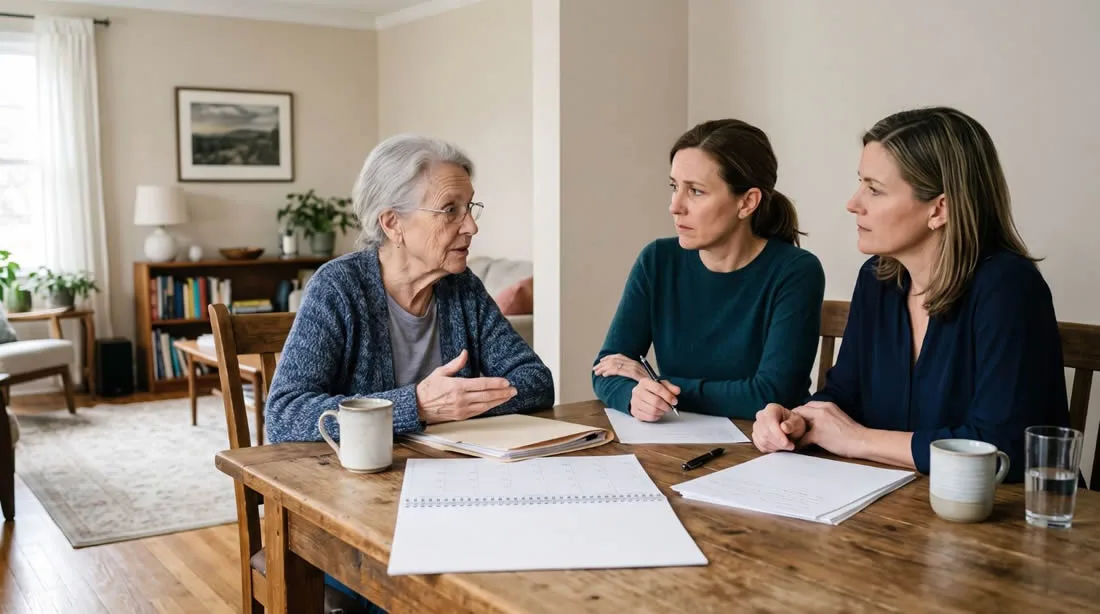
A Dementia Diagnosis Does Not End a Person’s Voice
One of the most important principles in planning for dementia is remembering whose life is being planned.
The person living with dementia should remain involved in conversations and decisions for as long as possible.
A diagnosis itself does not automatically remove a person’s ability to make decisions. Someone may be able to make some decisions independently, need support with others, or experience changes in their decision-making ability as their condition progresses.
Planning should therefore be done with the person, not simply around them.
That can include conversations about:
- What matters most to them.
- Who they trust to help them make decisions.
- Where they would prefer to receive care if their needs change.
- Treatments or medical interventions they feel strongly about.
- Cultural, spiritual or religious preferences.
- People they want involved in their life and care.
- Personal routines and things that make everyday life familiar.
- Their wishes for later life and after their death.
These conversations are not about taking control away.
Done properly, planning is about helping preserve the person’s choices, values and preferences for a time when communicating them may become more difficult.
Why Earlier End-of-Life Planning Matters
There is a tendency to think of end-of-life planning as something to do much later.
After retirement.
After a major health event.
When someone becomes frail.
Or when a family suddenly realises they need information that nobody can easily find.
Dementia demonstrates why that approach can create problems.
As dementia progresses, memory, thinking, communication and decision-making may change. Important conversations can become more difficult, and families may find themselves trying to work out what the person would have wanted.
Earlier planning creates an opportunity to document those wishes while the person can participate.
It can also reduce one of the most common practical problems families face during illness and care: important information existing in different places, in different people’s heads, or nowhere at all.
End-of-life planning is therefore not only about decisions surrounding death.
It is also about preparing the people who may need to support you before then.

Start With Conversations, Not Forms
Planning does not have to begin with a pile of paperwork.
Sometimes the most useful starting point is simply talking.
You might begin with questions such as:
- “What would be most important to you if you needed more help in the future?”
- “Who would you want involved in decisions about your care?”
- “Are there treatments or situations you feel strongly about?”
- “If someone had to step in and manage things for you, what would they need to know?”
- “Where are your important documents kept?”
- “What parts of your daily routine would you want someone to understand?”
- “What would you want your family to know if you could no longer explain it yourself?”
Not every question needs to be answered in one conversation.
Some answers may change.
The important thing is that the conversation has begun.
It is often much easier to revisit an existing discussion than to begin one for the first time during a medical crisis.
Legal and Healthcare Planning
Practical organisation does not replace proper legal planning.
Depending on where you live in Australia and your individual circumstances, planning may involve documents dealing with areas such as:
- Your will
- Enduring powers of attorney
- Substitute decision-makers
- Advance care planning
- Advance health directives or equivalent documents
- Financial decision-making
- Healthcare decisions
- Superannuation death benefit nominations
The terminology and legal requirements differ between Australian states and territories, so appropriate legal and healthcare advice is important.
Advance care planning is particularly relevant when dementia is involved because it allows a person to consider and communicate preferences about future healthcare.
Starting these discussions earlier may give the person greater opportunity to express their own wishes and participate in preparing the appropriate documents.
Legal documents answer important questions about authority and decision-making.
But they do not usually tell someone how your everyday life works.
That is where practical planning becomes equally important.

Organising the Practical Information Families May Need
Imagine someone needed to take over part of your life tomorrow.
Not permanently.
Just enough to keep things running.
Would they know who your healthcare providers are?
Which medications you take?
Which bills need attention?
Where your insurance information is?
Who looks after the pets?
Which services regularly come to the house?
Where important legal documents are stored?
Who needs to be contacted?
Which accounts, memberships and subscriptions exist?
What happens around the home each week without anyone really thinking about it?
This is the information families frequently carry in their heads.
It can work perfectly well while the person who knows everything is available to answer questions.
It becomes considerably less effective when that person is in hospital, has declining memory, becomes unable to communicate or dies.
A practical end-of-life planning system can help organise information such as:
- Healthcare providers and medical contacts
- Medication and health information
- Emergency contacts
- Household services and regular expenses
- Insurance information
- Banking and financial references
- Property information
- Pets and their care
- Memberships and subscriptions
- Digital accounts
- Locations of legal documents
- People and organisations that may need to be contacted
- Care routines
- Important family information
This does not mean placing every sensitive detail, password or legal document into one folder.
It means creating a clear pathway so the appropriate person knows what exists, what needs attention and where further information can be found.
The Everyday Details Matter Too
Some of the most useful information may seem too ordinary to record.
- What breakfast does the person normally eat?
- How do they take their coffee?
- What music do they enjoy?
- Is there a television program they watch every evening?
- What makes them anxious?
- Who do they enjoy speaking to?
- Do they prefer mornings or afternoons for appointments?
- Are there foods they dislike?
- What routines make an unfamiliar day feel more familiar?
For someone living with dementia, these details can form part of the person’s identity and everyday life.
They can also help family members, carers and healthcare providers understand the person beyond their diagnosis.
Planning should not become a clinical inventory of illnesses and legal documents.
It should still describe a person.
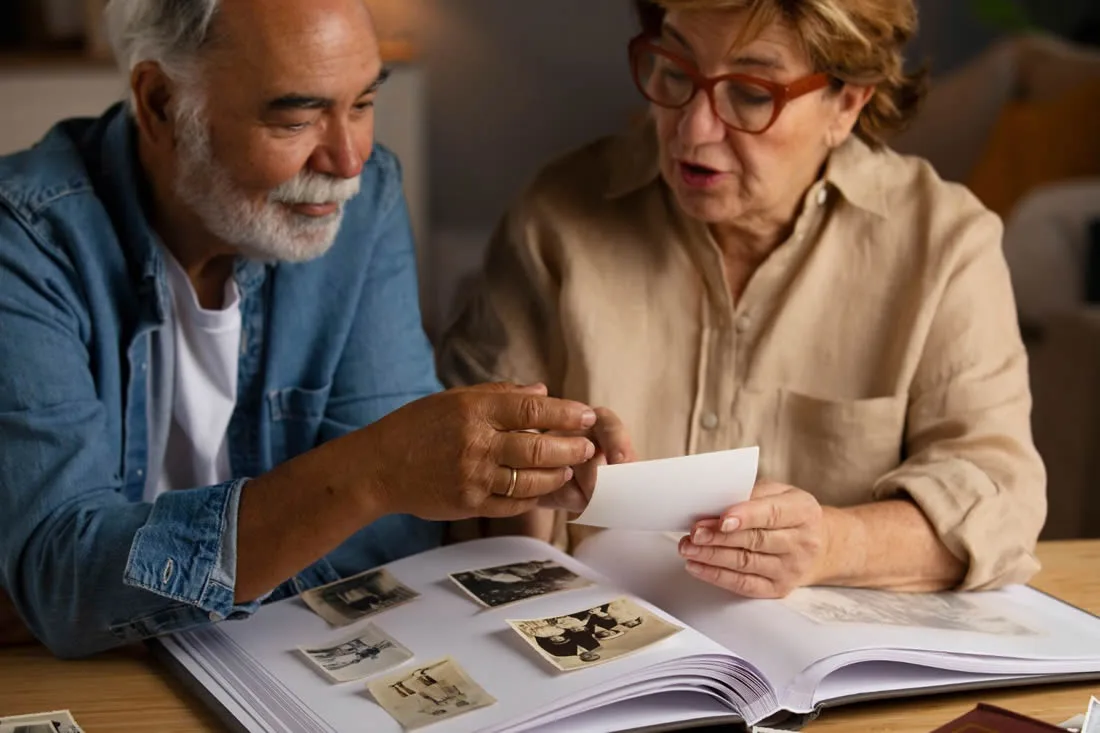
Personal Wishes, Memories and What Matters
There is another part of planning that forms and legal documents cannot capture very well.
The personal part.
People may want to record:
- Memories and life stories
- Family history
- Favourite recipes
- Meaningful photographs
- Important relationships
- Messages for family and friends
- Funeral or memorial preferences
- Music that matters to them
- Cultural or spiritual wishes
- Possessions with particular meaning
- Stories behind family traditions or keepsakes
None of this requires a dementia diagnosis.
These are worthwhile things for any of us to record.
But where memory may change over time, beginning earlier can provide more opportunity for the person to tell those stories in their own words.
That is not simply end-of-life administration.
It is preserving part of someone’s life.
Planning Is Not a One-Time Conversation
End-of-life planning should not be treated as a document you complete once, put in a cupboard and triumphantly ignore for the next twenty years.
Circumstances change.
Health changes.
Relationships change.
Addresses change.
Healthcare providers change.
People appointed to particular roles may no longer be available.
The person’s own preferences may change as they experience different stages of life and care.
Plans should therefore be reviewed periodically and particularly after significant changes in health, relationships, living arrangements or care needs.
For a person living with dementia, regular reviews also create opportunities to keep them involved while they are able to express their wishes and preferences.
Even a short review can help answer an important question:
“If someone needed this information today, would it still be correct?”

Dementia Action Week: A Reminder to Start the Conversation
Each year, Dementia Action Week encourages Australians to talk more openly about dementia, improve understanding and challenge stigma.
It is also a useful annual reminder to have conversations within our own families.
Not every discussion needs to begin with end-of-life planning.
It could begin with something much simpler:
“Have we actually talked about what you would want if your health changed?”
From there, families can begin looking at healthcare planning, legal documents, practical household information and personal wishes.
Dementia Action Week may last for a short period each year.
The conversations it encourages can matter for much longer.
Bringing End-of-Life Planning Together
A will can tell people what should happen to an estate.
An enduring power of attorney or equivalent legal appointment can establish who may make particular decisions.
Advance care planning can help communicate future healthcare wishes.
But families often need something else as well:
The practical information that explains how a life actually works.
That can include everything from healthcare contacts and household responsibilities to important documents, care information, personal wishes and the small details that would otherwise disappear with the person who knows them.
Handbook of Your Life was created to help organise that practical information as part of a broader end-of-life planning process.
It is designed to work alongside, rather than replace, professional legal, financial and healthcare advice.
Because knowing who has authority to act is important.
Knowing what needs to be done, where things are and what the person wanted can be just as valuable.
Dementia Information and Support
If you or someone you care for is living with dementia, information and support are available through Dementia Australia.
National Dementia Helpline
1800 100 500
The National Dementia Helpline provides free and confidential information, advice and support 24 hours a day, seven days a week.
For personalised medical, legal or financial advice, speak with the appropriate qualified professional.
Frequently Asked Questions
Resources and Further Information
Dementia Australia
Planning Ahead
Advance Care Planning and Dementia
Dementia Action Week
National Dementia Helpline
Advance Care Planning Australia
Advance Care Planning and Dementia – Joint Position Statement
Advance Care Planning for People Who Can’t Make Their Own Decisions
Australian Institute of Health and Welfare
Important Information
This article is provided for general information and educational purposes only. It does not constitute legal, financial, medical or other professional advice.
Information, statistics, legislation and external resources may change after publication. Readers are encouraged to verify information with current, authoritative sources, conduct their own research and seek qualified professional advice where appropriate.