
September is Prostate Cancer Awareness Month, an opportunity to start conversations about a disease that will affect a significant number of Australian men and their families.
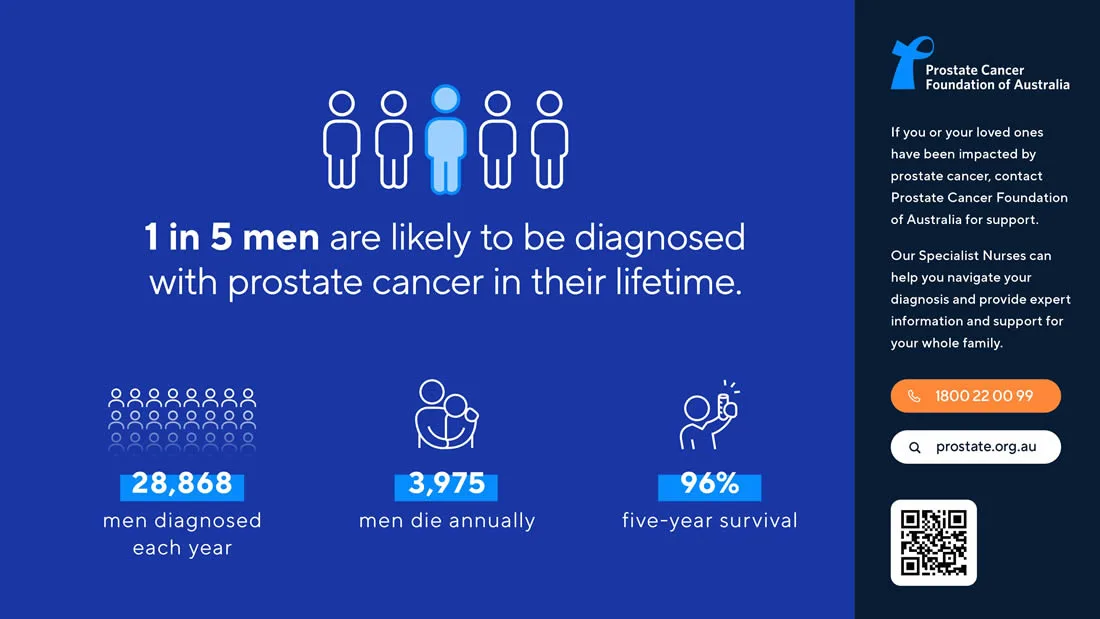
Prostate cancer is the most commonly diagnosed cancer among Australian men. Cancer Australia estimated that 28,868 men would be diagnosed in 2025, accounting for around 30% of all new cancer diagnoses in Australian males. It also estimated that around 1 in 5 Australian men would be diagnosed with prostate cancer by the age of 85.
Those figures are confronting, but awareness is not about creating fear. It is about understanding risk, knowing when to speak with your doctor and making informed decisions about your health.
What is prostate cancer?
The prostate is a small gland that forms part of the male reproductive system. It sits below the bladder and produces fluid that forms part of semen.
Prostate cancer develops when abnormal cells grow within the prostate.
Some prostate cancers grow slowly and may be monitored or successfully managed for many years. Others are more aggressive and can spread beyond the prostate to other parts of the body.
The outlook for men diagnosed with prostate cancer has improved considerably. Cancer Australia reports that men diagnosed between 2017 and 2021 had a 96% chance of surviving for at least five years compared with similar men in the general population.
That does not make prostate cancer something to ignore. It does mean that awareness, appropriate testing and advances in treatment are making a real difference.
Prostate cancer may have no early symptoms
One of the difficulties with prostate cancer is that it may cause no noticeable symptoms in its early stages.
When symptoms do occur, they can include:
- needing to urinate more frequently, particularly at night
- a sudden or urgent need to urinate
- difficulty starting urination
- a weak or interrupted urine stream
- discomfort or pain while urinating
- blood in the urine or semen
- pain in the lower back, hips or upper thighs.
These symptoms do not necessarily mean you have prostate cancer. Other prostate and urinary conditions can cause similar changes.
However, changes in urination or other unexplained symptoms should not simply be ignored. Speak with your GP if you notice something different or are concerned about your prostate health.

The Questions Families May Suddenly Face
- Which bank did they use?
- Was the funeral preference written down somewhere?
- Where is the insurance policy?
- Is that payment coming from a bank account or a credit card?
- Who needs to be contacted about the children?
- What happens with the pets?
- Was that account still being used?
- Where are the important documents?
- Who was their accountant?
- Did they have another superannuation fund?
One unanswered question may be manageable.
Dozens of them, arriving while someone is shocked, exhausted and grieving, can become an entirely different burden.
Who is at greater risk of prostate cancer?
Age is one of the strongest risk factors for prostate cancer, with the likelihood of developing the disease increasing as men get older.
Family history also matters.
Men with close relatives who have been diagnosed with prostate cancer may have a higher risk, particularly where prostate cancer has affected several family members or occurred at a younger age.
This is why knowing your family medical history can be useful.
If your father, brother or another close relative has had prostate cancer, tell your GP. Your individual circumstances can help guide the conversation about whether testing is appropriate and when it should begin.
What is a PSA test?
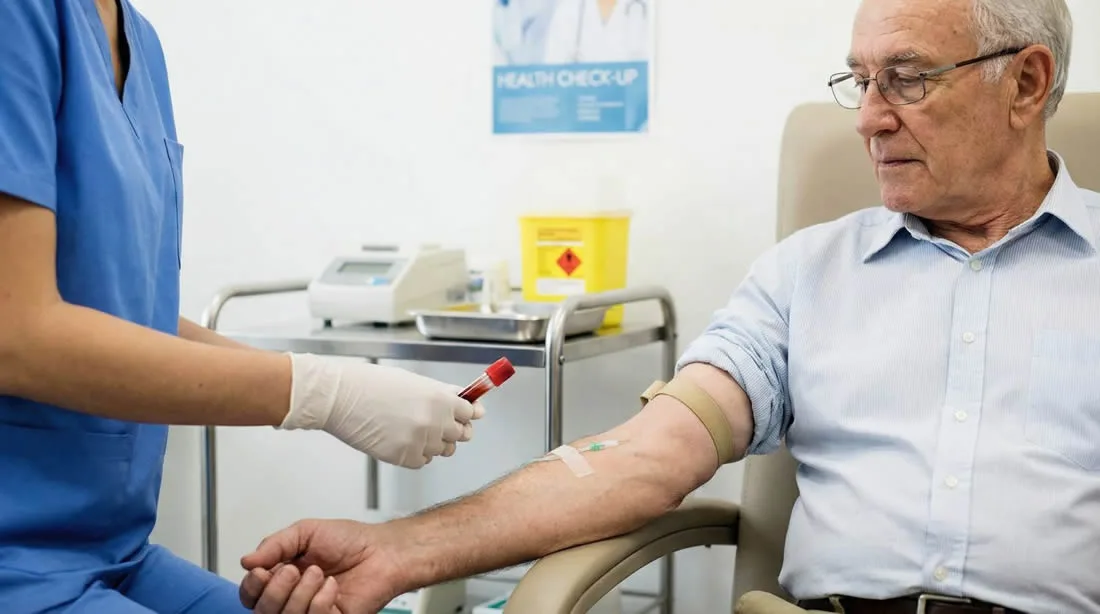
A prostate specific antigen, or PSA, test is a blood test that measures the amount of PSA in your blood.
PSA is naturally produced by the prostate. Higher levels can sometimes be associated with prostate cancer, but an elevated result does not automatically mean cancer is present.
PSA levels can also be affected by other prostate conditions, infection, age and other factors.
Likewise, it is possible for prostate cancer to be present even when a PSA result is not particularly high.
For these reasons, a PSA test does not diagnose prostate cancer on its own. Results need to be considered alongside your age, symptoms, risk factors and other clinical information.
If further investigation is required, this may include repeat PSA testing, an MRI and, where appropriate, a biopsy.
Australia has new prostate cancer early-detection guidelines
An important development in 2026 was the release of updated Clinical Practice Guidelines for the Early Detection of Prostate Cancer in Australia.
The new guidelines were developed by the Prostate Cancer Foundation of Australia and approved by the National Health and Medical Research Council.
They replace guidelines that had been in place since 2016 and reflect advances in prostate cancer detection over the past decade.
The updated guidance covers areas including:
- assessing an individual’s prostate cancer risk
- shared decision-making between patients and doctors
- when PSA testing may be appropriate
- how frequently testing may be undertaken
- what should happen when PSA levels are higher than expected
- the increased role of multiparametric MRI before biopsy
- monitoring men diagnosed with lower-risk prostate cancer.
Australia does not have a population-wide prostate cancer screening program that automatically tests all men of a particular age.
Instead, men are encouraged to discuss their individual risk and the potential benefits and limitations of PSA testing with their GP.
If you are unsure whether you should be tested, particularly if you have a family history of prostate cancer, that conversation is a sensible place to start.
A prostate cancer diagnosis affects more than physical health
Cancer rarely affects only the person receiving the diagnosis.
Appointments, tests and treatment can affect work, relationships, finances, routines and family responsibilities.
Treatment for prostate cancer can also have physical and emotional effects, including changes to urinary continence and sexual function.
Partners and family members may suddenly find themselves attending appointments, providing care or taking responsibility for parts of everyday life that somebody else previously managed.
For some families, that can reveal just how much important information has been carried in one person’s head.

Support is available
Nobody needs to navigate prostate cancer alone.
The Prostate Cancer Foundation of Australia provides information and support for men, partners, carers and families affected by prostate cancer.
Services include Prostate Cancer Specialist Nurses, telephone support, counselling, peer support through MatesCONNECT and prostate cancer support groups around Australia.
To speak with a Prostate Cancer Specialist Nurse, contact PCFA on 1800 22 00 99.
If you have symptoms, concerns about your prostate health or questions about PSA testing, speak with your GP.
Prostate Cancer Awareness Month is a useful reminder to have conversations that are easy to postpone.
Know your family history. Pay attention to changes in your body. Ask questions. Talk with your doctor.
And beyond your health, consider whether the people closest to you could find the information they would need if circumstances suddenly changed.
A little organisation today can remove a great deal of uncertainty tomorrow.
Resources and Further Information
Prostate Cancer Foundation of Australia – Information and Support
Information and support for people affected by prostate cancer, including specialist nursing, counselling, peer support and online resources.
PCFA MatesCONNECT – Phone-Based Peer Support
A telephone-based peer support service connecting men affected by prostate cancer with trained volunteers who have been through prostate cancer themselves.
PCFA Prostate Cancer Specialist Nurses
Information about PCFA’s specialist prostate cancer nursing and support services.
Find a Prostate Cancer Support Group
Search PCFA’s national directory of prostate cancer support groups by state, suburb or postcode.
Cancer Australia – Prostate Cancer in Australia Statistics
Australian data on prostate cancer diagnoses, deaths, survival rates and prevalence.
Healthdirect Australia – Prostate Cancer
Information about prostate cancer symptoms, diagnosis, treatment, risk factors and living with prostate cancer.
Healthdirect Australia – Prostate Specific Antigen (PSA) Test
Information about PSA blood testing, what results may mean and the role of PSA testing in prostate cancer detection.
PCFA – New Guidelines for the Early Detection of Prostate Cancer
The 2026 Australian guidelines covering PSA testing, risk assessment, testing intervals and further investigation.
Practical planning when illness changes everyday life
A prostate cancer diagnosis does not automatically mean someone is approaching the end of their life. Many men live for many years following diagnosis and treatment.
However, serious illness can temporarily or permanently change who is able to manage everyday responsibilities.
If illness or treatment meant somebody else suddenly needed to step in, would they know:
- which financial institutions and service providers you use
- what insurance policies you hold
- where important documents are kept
- who needs to be contacted
- how household bills are managed
- what digital accounts and subscriptions exist
- what arrangements are required for children or pets
- which regular household responsibilities need attention?
These are very different questions from those answered by a Will.
A Will is an essential legal document, but it does not provide an instruction manual for the practical details of everyday life.
That is where personal affairs organisation can become particularly valuable.
Where end-of-life planning fits
End-of-life planning is not about assuming the worst every time someone becomes ill.
It is about making sure important decisions, documents and practical information are organised before they are urgently needed.
For someone living with cancer or another serious illness, getting organised can also help during treatment and recovery. A partner, family member or carer may need to manage things temporarily even when the person is expected to recover and continue doing so themselves later.
Getting organised cannot remove the emotional impact of serious illness or death.
What it can do is reduce some of the unnecessary searching, guessing and uncertainty for the people who may one day need to step in.
Handbook of Your Life was created to complement your Will and other legal documents by helping you organise the personal, household and practical information that sits outside them.
It provides a structured place to record information that loved ones may otherwise be left searching for at an already difficult time.