

Practical End-of-Life Planning Beyond Your Will
A Will is important, but it doesn’t tell your family everything they’ll need to know when you’re gone.
- Who handles the household bills?
- Where are important documents kept?
- What arrangements have already been made?
- And who knows the everyday details that have always been your responsibility?
These are the practical questions that can leave loved ones searching for answers during an already difficult time.
Good end-of-life planning isn’t only about what happens to your belongings. It’s also about making your affairs easier for someone else to understand and manage.
Here are seven practical ways to make that task a little easier.
1. Get the Everyday Information Out of Your Head
Think about everything you manage without needing to write it down.
Your banking arrangements, household services, insurance, subscriptions, pet care, important contacts and perhaps the daily routines of children or someone you’re caring for.
You might know exactly where everything is. But would someone else?
Start recording the practical information another person would need to manage your affairs.
A structured system can help ensure important details aren’t overlooked. The Handbook of Your Life® System brings personal, household and planning information together, with different Handbook Kits designed for individuals, couples, parents and carers.
The aim isn’t to document every minute of your life. It’s to record the information someone else would genuinely need.
2. Make Your Information Easy to Update
Circumstances change. You might move house, change banks, take out insurance, purchase an investment or close an account.
That’s why end-of-life planning shouldn’t be treated as a once-only exercise.
For handwritten personal records, using pencil makes it easier to correct details and update information as things change. Keeping a pencil, rubber and sharpener with your documents also makes regular updates more convenient.
Formal legal documents and anything requiring permanent entries or signatures should, of course, be completed according to their specific requirements.
The easier your records are to maintain, the more likely they are to remain useful.
3. Make It Obvious What’s Completed — and What Isn’t
Imagine opening someone’s personal records and finding several empty sections.
Were those details forgotten? Did they not apply? Was the person planning to come back to them?
A simple marking system can remove some of that uncertainty.
For example:
- ✓ — Completed
- N/A — Not applicable
- TBA — Information still to be gathered or finalised
Where an entire section doesn’t apply, marking it clearly is often more helpful than leaving it blank.
The Completion Tracker & Notes Companion, included with Handbook of Your Life Kits, provides a way to track progress and outstanding information.
If you’re using a separate tracker, remember to keep it current. Once your records are complete, update the tracker to reflect their final status or remove it after transferring any important notes.
The objective is simple: someone shouldn’t have to guess whether information is missing or deliberately left out.
4. Make Important Documents Easy to Find
Knowing that a document exists isn’t much help if nobody knows where it is.
Writing “in my filing cabinet” may still leave someone searching through years of paperwork.
Be specific. Identify the folder, drawer, location or professional holding the document.
Some of the most important records to consider include your Will, powers of attorney, healthcare directives, insurance policies and any funeral arrangements you’ve made.
And don’t overlook the personal side of end-of-life planning.
Have you communicated your funeral wishes? Are there messages you’d like loved ones to receive?
The Funeral Planning Workbook included with all end-of-life planning Handbook Kits helps you document your preferences and prepare for formalising arrangements with a funeral provider.
The Handbook also provides dedicated references for Funeral Planning in Appendix A and Written Messages in Appendix B, so loved ones know where to look.
For formal legal matters, the Legal Documents Preparation Guide helps you identify questions and information to discuss with the appropriate professionals.
The goal is not simply to have documents prepared. It’s to ensure they can actually be found when needed.
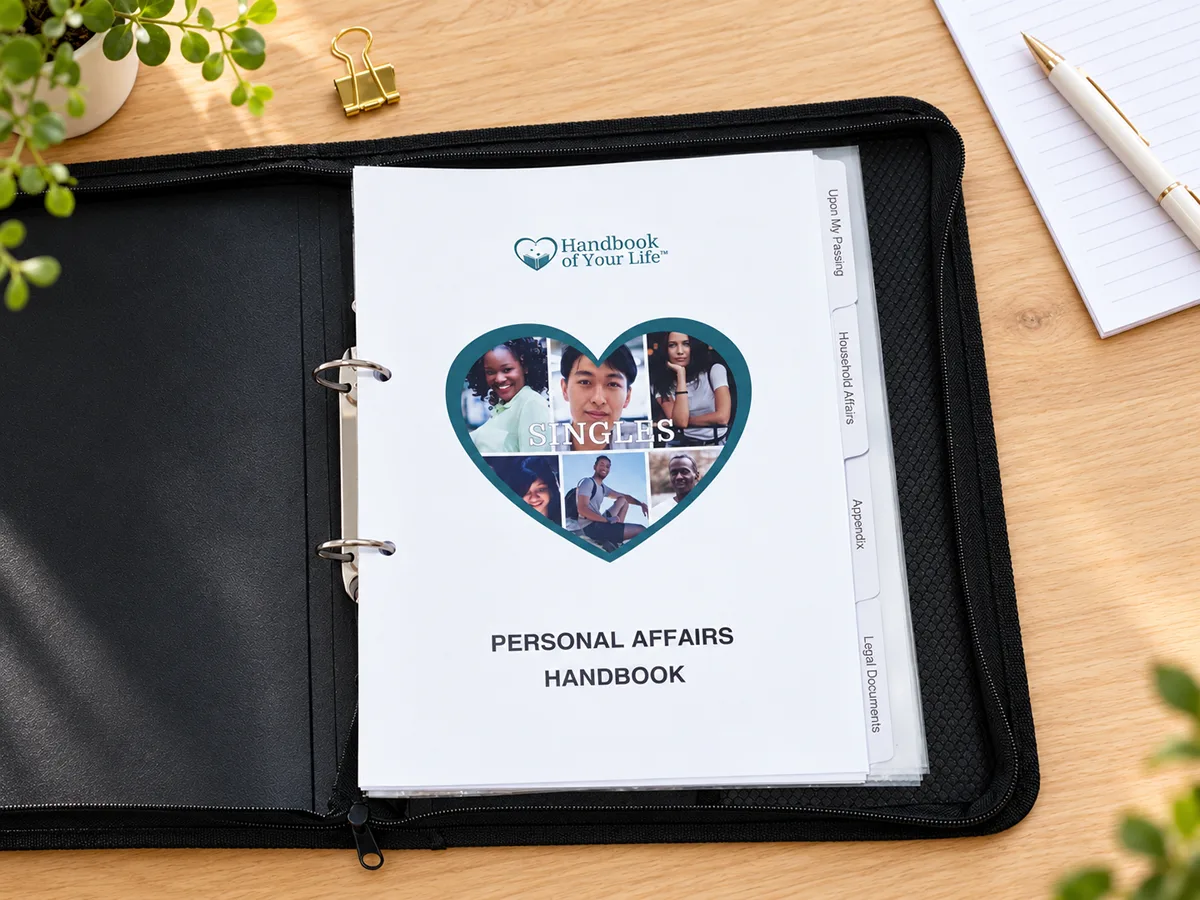
5. Be Mindful About How Sensitive Information Is Documented
Getting organised doesn’t mean placing every confidential detail in one readily accessible folder.
Passwords and other sensitive account information deserve additional consideration.
Think about how your records can remain useful to someone with a legitimate need to access them, without unnecessarily exposing confidential information.
Handbook of Your Life Kits include the optional, proprietary 2DocLock™ Security System, developed to help protect sensitive information as part of your personal affairs organisation.
Whatever method you choose, it’s important that your Nominated Person understands the arrangements you’ve made and knows where the relevant information can be located when required.
6. Talk to the Person or People Who May Need to Step In
Preparing everything in writing is valuable. But a conversation can make those records considerably more useful.
Consider speaking with your Nominated Person or another trusted individual about:
- Where your important information is kept.
- How your documents are organised.
- Any arrangements that have already been made.
- Information or decisions that remain outstanding.
- Where they can obtain assistance if something is unclear.
You don’t necessarily need to go through every detail together. Even explaining the overall system can help someone understand where to begin.
Handbook of Your Life also includes Free Loved Ones Support, providing guidance for people who may need to use a Handbook during illness, incapacity or after a death.
Because leaving someone organised information is helpful. Making sure they understand how to use it is even better.
7. Review Your Plans at Least Once a Year
Accounts close, addresses change, relationships evolve and documents can become outdated.
Set aside some time at least annually to review your personal affairs and end-of-life planning information.
You should also consider reviewing your records after major life changes, such as moving house, marriage, separation, retirement, significant changes in health or changes to caring responsibilities.
Check that important contacts, document locations, financial arrangements and personal wishes remain current.
Handbook of Your Life Kits include access to the Customer Resources Portal, where owners can access additional printable pages, guides and ongoing support.
Remember, you’re not simply trying to complete a checklist. You’re creating a useful resource that may need to remain accurate for years to come.
A Little Preparation Today Can Make a Meaningful Difference
You don’t need to have every answer, and you don’t need to organise everything in one sitting.
Start with the information you know. Identify what’s still outstanding. Make important documents easier to locate and talk to the people who may one day need to use them.
End-of-life planning is often discussed in terms of legal documents and final wishes. But the everyday information that keeps a household running can be just as important to those left managing it.
The more clearly you organise your affairs today, the less uncertainty you may leave for someone tomorrow.
Frequently Asked Questions
Disclaimer: This article is provided for general information and educational purposes only. It does not constitute legal, financial, medical or other professional advice. Information, statistics, legislation and external resources may change after publication. Readers are encouraged to verify information with current, authoritative sources, conduct their own research and seek qualified professional advice where appropriate.